Quick Answer
An AI-based energy management system continuously analyzes factory energy consumption and operational data to identify waste, forecast demand, and recommend improvements. It can help manufacturers reduce avoidable energy costs, manage peak demand, detect inefficient equipment, and connect energy decisions with production requirements.
Energy has become a strategic operating concern for manufacturers. Electricity, natural gas, compressed air, steam, heating, cooling, and process equipment all contribute to production costs. However, many factories still review energy performance through monthly utility bills, fixed reports, or isolated meters. These methods show how much energy was used, but they do not always explain where it was wasted or how operations should respond.
An AI-based energy management system adds predictive and decision-support capabilities to conventional energy monitoring. It analyzes energy consumption alongside production schedules, machine conditions, weather, utility tariffs, equipment availability, and facility demand. Manufacturers can then identify waste, anticipate demand, optimize equipment operation, and make energy decisions without compromising production, quality, or safety.
AI does not replace an energy management program or experienced plant personnel. It gives energy, ai agents for energy operations, and maintenance teams continuous intelligence for improving how the factory consumes and manages energy.
What Is an AI-Based Energy Management System?
An AI-based energy management system is a software and data platform that uses machine learning, predictive analytics, connected sensors, and automation to monitor and optimize energy consumption.
A conventional energy management system typically collects meter data, presents dashboards, and helps teams track energy performance indicators. An AI-enabled system goes further by interpreting patterns, predicting future consumption, detecting unusual behavior, and recommending actions based on operational context.
The system may use information from:
- Electricity, gas, steam, water, and compressed-air meters
- Equipment sensors and industrial IoT devices
- Building management systems
- Manufacturing execution systems
- SCADA and plant-control systems
- ERP and production-planning platforms
- CMMS or enterprise asset management systems
- Utility tariff and peak-demand data
- Weather and environmental information
- Historical energy and production records
The U.S. Department of Energy defines an energy management system as a set of practices that enables continual improvement in energy performance through quantitative tools, informed decisions, and energy-saving practices. AI can strengthen this foundation, but it does not replace the organizational processes behind effective energy management.
Why Factory Energy Management Is Difficult
Energy consumption in a factory is affected by more than production volume. Two shifts producing the same output may use different amounts of energy because of machine conditions, operating speeds, changeovers, ambient temperature, maintenance status, or equipment sequencing.
Factories also contain several interdependent energy systems. A change in production may affect compressed-air demand, cooling requirements, ventilation, steam consumption, and electrical load at the same time. These relationships can be difficult to evaluate through separate dashboards.
Other common challenges include:
- Limited visibility below the facility or utility-meter level
- Machines drawing power while idle
- Simultaneous equipment startup creating demand peaks
- Compressed-air leaks and unstable pressure
- Inefficient HVAC or process-cooling operation
- Equipment deterioration increasing energy consumption
- Inconsistent energy practices across shifts
- Energy data separated from production data
- Difficulty comparing plants with different products and operating conditions
Monthly utility reports arrive too late to address many of these problems. Manufacturers need a system that can identify changes while operations are still in progress.
How an AI-Driven Energy Management System Works
An AI-driven system begins by collecting data from energy meters, machinery, sensors, plant applications, and external sources. That information is standardized and connected to operational context, such as the active production line, product type, shift, batch, equipment state, or production target.
Machine-learning models then establish expected consumption patterns. Instead of applying one static threshold, a model can consider what the factory is producing and under what conditions.
For example, high electrical consumption may be normal during a production ramp-up but abnormal during a planned idle period. An AI model can evaluate that distinction before generating an alert.
The system can then:
- Detect abnormal energy consumption.
- Identify equipment or processes contributing to the deviation.
- Forecast future demand or peak-load exposure.
- Recommend operational changes.
- Send findings to energy, maintenance, or production teams.
- Measure whether approved actions improved performance.
AI agents can support this process by retrieving equipment history, production schedules, energy procedures, maintenance records, and tariff information. They can summarize why an anomaly matters and route the issue to the appropriate person.
AI-Based Energy Management System Use Cases
Real-Time Energy Monitoring and Anomaly Detection
AI can continuously compare actual consumption with expected consumption for a machine, process, production line, or facility.
If a compressor begins consuming more electricity without a corresponding increase in production demand, the system can flag the change. Similar detection can be applied to pumps, motors, furnaces, chillers, HVAC equipment, refrigeration systems, and other high-energy assets.
This approach helps teams investigate energy waste before it appears in a monthly bill.
Energy Demand Forecasting
Predictive models can forecast factory energy requirements using production schedules, historical consumption, equipment availability, shift patterns, weather conditions, and planned maintenance.
A reliable forecast helps operations and energy teams anticipate high-demand periods. It also supports energy purchasing, capacity planning, and participation in appropriate utility demand-response programs.
Forecasts indicate likely demand based on available data. Unexpected equipment failures, urgent orders, production changes, or extreme weather can still affect actual consumption.
Peak-Demand Management
Many commercial and industrial electricity tariffs include charges based on the facility’s highest demand during a billing period. Brief periods of simultaneous high consumption can therefore affect costs beyond the energy used during those moments.
AI can predict when the factory is approaching a peak and recommend adjustments. These may include changing equipment startup sequences, moving flexible loads, modifying battery usage, or rescheduling noncritical processes.
Any recommendation must respect production deadlines, process constraints, worker safety, and product-quality requirements.
Equipment-Level Energy Optimization
AI for energy optimization can analyze the relationship between machine settings, operating conditions, output, and energy consumption. This helps identify the most energy-efficient operating range for specific equipment or processes.
A furnace, for example, may use more energy when operated at certain loads or during repeated startups. A model can compare operating patterns and recommend scheduling or configuration changes.
Optimization should remain within approved engineering limits. Energy savings should never be pursued at the expense of equipment reliability, production quality, or safety.
Idle-Time and Standby Energy Reduction
Machines, conveyors, ventilation systems, pumps, and auxiliary equipment may continue consuming energy during breaks, changeovers, production delays, or unplanned downtime.
AI can distinguish between necessary standby consumption and avoidable idle energy. It may recommend shutting down selected equipment, changing standby settings, or adjusting the timing of supporting systems.
Automated shutdowns should be used only when operating requirements, restart procedures, maintenance needs, and safety controls have been fully evaluated.
Predictive Maintenance Through Energy Patterns
Increasing energy consumption can be an early sign of equipment deterioration. Worn bearings, clogged filters, leaking compressed-air systems, misaligned motors, poor lubrication, or unstable control loops may cause equipment to consume more energy than expected.
Combining energy data with vibration, temperature, pressure, and maintenance records can help identify emerging problems. This creates value beyond energy savings because the same analysis may support equipment reliability and preventive maintenance.
HVAC, Cooling, Steam, and Compressed-Air Optimization
Utility systems often serve multiple processes and production areas. Their performance depends on load, occupancy, weather, equipment condition, and production requirements.
AI can help optimize:
- HVAC schedules and temperature setpoints
- Chiller and cooling-tower sequencing
- Boiler and steam-system operation
- Compressed-air pressure and compressor staging
- Refrigeration demand
- Ventilation based on actual operational conditions
These recommendations should remain within required environmental, process, safety, and regulatory limits.
Renewable Energy and Battery Coordination
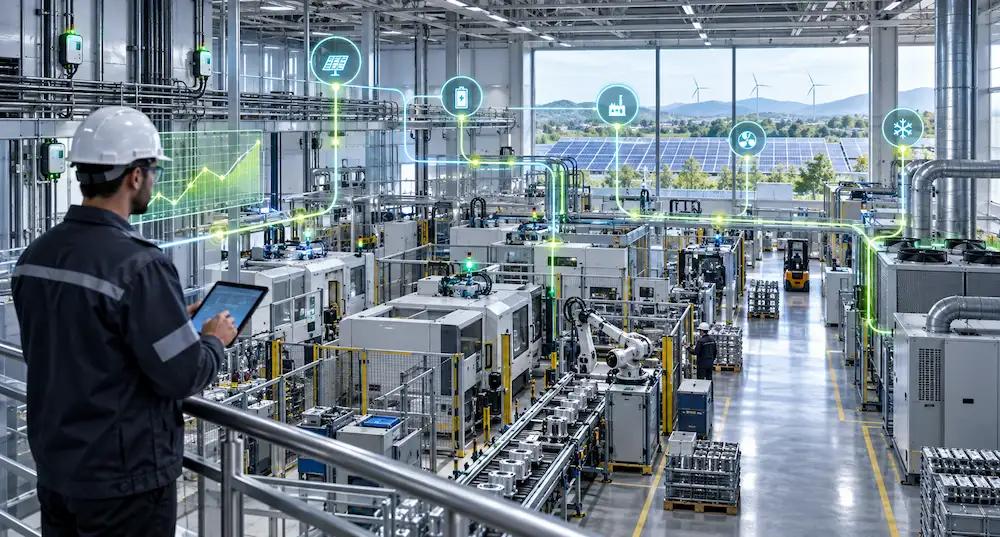
Factories with solar generation, battery storage, or other distributed energy resources must decide when to consume, store, or export power.
AI can forecast on-site generation and factory demand, then recommend how batteries or flexible loads should be scheduled. The objective may be to reduce peak demand, increase use of on-site renewable energy, improve resilience, or manage electricity costs.
The system must account for battery constraints, equipment warranties, utility rules, operational requirements, and backup-power priorities.
How Does AI-Driven Energy Management Support the Business Model?
AI-driven energy management supports a manufacturing business model by connecting energy performance with production economics.
Energy is not only a facility cost. It can affect product margins, equipment availability, production capacity, sustainability commitments, capital planning, and customer requirements. An AI system makes these relationships easier to measure.
For example, manufacturers can compare energy consumption by product, batch, production line, shift, or facility. This allows leaders to understand whether a high-volume product is also energy intensive, whether one plant operates less efficiently than another, or whether equipment deterioration is increasing unit costs.
AI-driven energy management can support the business model through:
- More accurate energy-cost allocation
- Better understanding of energy cost per unit
- Improved production and equipment scheduling
- Reduced exposure to peak-demand charges
- Earlier detection of operational inefficiencies
- Better capital-investment prioritization
- Improved sustainability reporting
- Stronger resilience and energy planning
- More consistent performance across facilities
Can AI Reduce Energy Use Without Affecting Production?
AI can help reduce avoidable consumption without reducing output when it identifies inefficiencies that do not contribute to productive work. Examples include idle equipment, air leaks, unnecessary heating or cooling, poor equipment sequencing, and operation outside efficient load ranges.
However, the relationship between energy and production must be modeled carefully. A recommendation that lowers energy use but slows a critical process, increases defects, or accelerates equipment wear may not create business value.
The right objective is not simply to minimize kilowatt-hours. It is to optimize energy intensity, cost, reliability, quality, and production performance together.
Human approval should remain mandatory for recommendations that materially affect production schedules, process settings, safety systems, or product specifications.
Measuring the Benefits of AI Energy Management
Manufacturers should establish a baseline before implementing an AI-based energy management system. Consumption must be normalized for factors such as production volume, product mix, operating hours, temperature, and facility conditions.
Useful performance measures include:
- Total energy consumption
- Energy cost per unit produced
- Energy consumption by line or asset
- Peak electrical demand
- Energy consumed during idle time
- Forecast accuracy
- Number of validated energy anomalies
- Time required to detect abnormal consumption
- Compressed-air, steam, or cooling efficiency
- Avoided cost from approved operational changes
- Carbon emissions associated with energy use
- Production, quality, and downtime effects
Savings should be measured against an agreed baseline rather than a simple comparison with the previous month. Seasonal conditions, production changes, and maintenance events can otherwise create misleading results
Limitations of AI-Enabled Energy Management
AI energy management depends on reliable data. Missing meter readings, inaccurate sensors, inconsistent asset names, weak production context, or poorly synchronized timestamps can produce unreliable recommendations.
Models may also drift when machinery, products, schedules, tariffs, or facility layouts change. A model that performed well during one production period may become less accurate after a major process modification.
Other limitations include:
- Insufficient submetering
- Integration complexity
- Legacy equipment and proprietary protocols
- Cybersecurity exposure
- Limited historical data
- False alerts
- Inaccurate demand forecasts
- Difficulty proving causation
- Workforce resistance
- Overreliance on automated recommendations
Cybersecurity is particularly important because the system may connect IT applications with operational technology. Access should be limited, authenticated, monitored, and separated according to plant security requirements.
AI should initially recommend actions rather than directly control critical equipment. Autonomous actions should be limited to predefined, reversible scenarios that have been technically validated and approved.
How Manufacturers Should Implement an AI Energy Management System
Start with a specific energy problem rather than attempting to optimize an entire factory immediately. A suitable first use case could involve compressed-air efficiency, peak-demand management, chiller optimization, idle-equipment detection, or energy anomaly monitoring for one production line.
Establish the current energy baseline and identify the operational variables that influence consumption. Then assess meter coverage, sensor quality, data availability, system connectivity, and ownership of the relevant data.
The pilot should include energy managers, production leaders, maintenance teams, IT and OT specialists, and equipment operators. These groups understand constraints that may not be visible in the data.
During the pilot, compare AI recommendations with actual plant conditions. Measure detection accuracy, false alerts, forecast performance, energy impact, production impact, and the time employees spend responding.
After validation, integrate the system with existing MES, ERP, SCADA, CMMS/EAM, building-management, and utility platforms where useful. Define approval thresholds, escalation paths, model-monitoring responsibilities, and cybersecurity controls before scaling across additional assets or facilities.
How Intellectyx Helps Build AI-Based Energy Management Systems
Intellectyx is an Enterprise Agentic AI innovation and delivery partner. We design, build, and operate production AI that delivers measurable business outcomes.
For factory energy management, Intellectyx can combine industrial data engineering, predictive analytics, anomaly detection, AI agents, enterprise knowledge AI, and governed workflow automation.
A solution can integrate data from meters, sensors, machinery, MES, ERP, SCADA, CMMS/EAM, building-management systems, utility tariffs, and production schedules. AI agents can then monitor energy performance, explain unusual consumption, retrieve relevant equipment information, and route recommendations to energy, maintenance, or operations teams.
The approach does not require manufacturers to replace every existing system. Intellectyx can connect AI capabilities with current factory infrastructure while establishing human approvals, security controls, model evaluation, and ongoing monitoring.
Conclusion
An AI-based energy management system helps manufacturers move from retrospective energy reporting to continuous, predictive energy management. It can detect waste, forecast demand, manage peak exposure, improve equipment efficiency, and connect energy decisions with production requirements.
The greatest value comes from optimizing energy and operations together. Manufacturers should not treat AI as an automatic cost-cutting system or allow it to change critical processes without appropriate controls.
A strong implementation combines accurate data, clear performance baselines, plant expertise, governed AI models, and human decision-making. With this foundation, AI-enabled energy management can support lower operating costs, improved equipment performance, stronger sustainability reporting, and more resilient factory operations.
Frequently Asked Questions
What is an AI-based energy management system?
An AI-based energy management system uses machine learning, predictive analytics, sensors, and operational data to monitor and optimize energy consumption. It can detect anomalies, forecast demand, recommend efficiency improvements, and connect energy