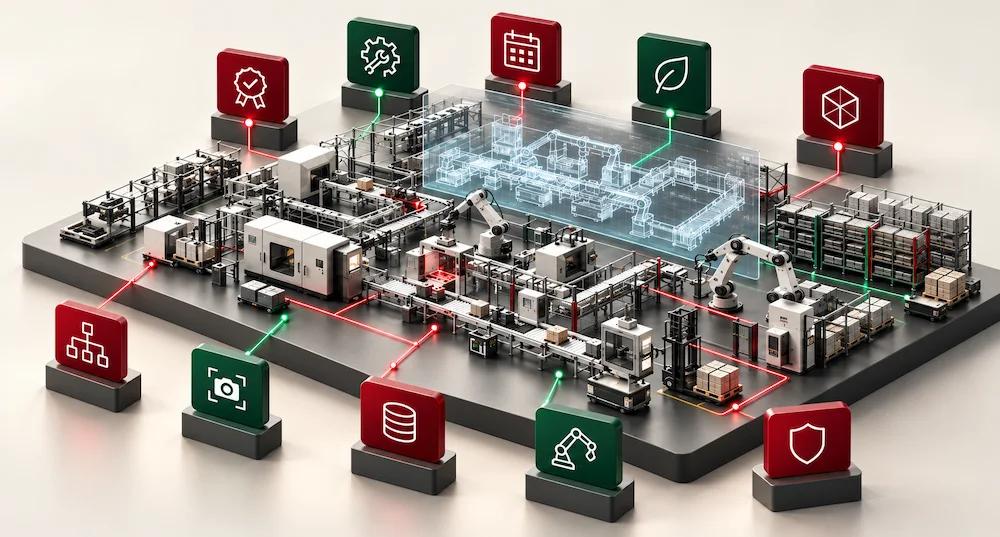
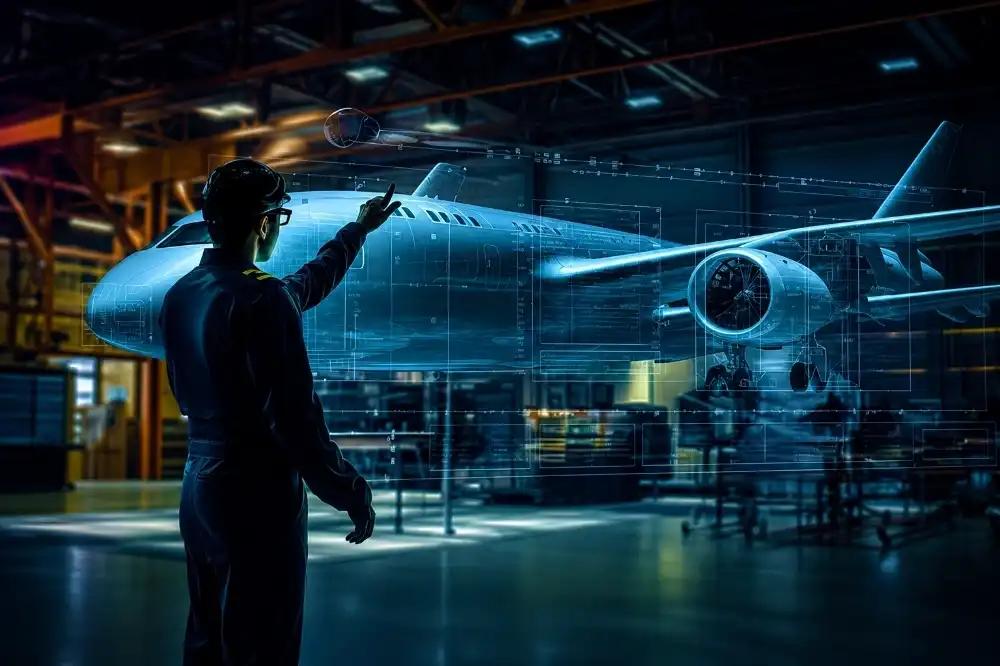
AI integration in aerospace manufacturing workflows enables predictive maintenance, intelligent production planning, automated quality inspection, and real-time decision-making helping manufacturers reduce delays, improve precision, and optimize costs at scale.
In an industry where a single defect can cost millions and delay ripple across global supply chains, AI is no longer optional; it's becoming a core operational layer.
If you're evaluating how to implement AI in aerospace manufacturing, this guide breaks it down into real use cases, measurable benefits, and a practical implementation path.
Modern manufacturing ecosystems are increasingly leveraging manufacturing AI agents development to automate decision-making across production, supply chain, and maintenance functions.
What Does AI Integration in Aerospace Manufacturing Workflows Actually Mean?
AI integration is not about adding a standalone tool, it's about embedding intelligence into every stage of the manufacturing lifecycle.
Where AI Fits Across the Workflow
AI enhances decision-making across:
- Design & Engineering: AI-driven simulations and generative design
- Supply Chain: Demand forecasting and disruption prediction
- Production: Scheduling, robotics, and process optimization
- Quality Assurance: Automated inspection using computer vision
- Maintenance: Predictive analytics for equipment and aircraft health
Technologies Powering AI Integration
- Machine Learning (ML): Identifies patterns and predicts outcomes
- Computer Vision: Detects defects with high precision
- Predictive Analytics: Forecasts failures and delays
- NLP (Natural Language Processing): Automates compliance documentation
Key Insight: AI acts as a decision intelligence layer not just automation. It continuously learns from data, improving accuracy and performance over time.
Optimize your aerospace manufacturing with AI-driven precision
Talk to an AI ExpertWhere Is AI Actually Used? (High-Impact Use Cases)
1. Design Optimization & Simulation
Aircraft design traditionally requires multiple costly iterations and extensive physical testing.
AI transforms this by:
- Running thousands of simulations simultaneously
- Identifying lightweight yet durable structures
- Reducing dependence on physical prototypes
Mini Caselet:A leading aerospace manufacturer applied AI-driven generative design to optimize wing structures. The system evaluated stress distribution across multiple scenarios and suggested a design that reduced material usage while maintaining strength cutting validation time by 40%.
Impact: Faster innovation cycles, reduced engineering costs, and improved product performance.
The integration of AI into manufacturing workflows extends naturally into the aftermarket — explore how Intellectyx's aerospace MRO operations platform automates work-order management, parts sourcing, and technician tasking.
2. Predictive Maintenance (Mission-Critical Use Case)
Instead of fixed maintenance schedules, AI enables condition-based maintenance, similar to advancements in predictive maintenance automation in automotive AI consulting, where real-time data drives proactive decisions.
- IoT sensors capture real-time performance data
- AI models detect anomalies and predict failures
- Maintenance is triggered only when needed
Example:
An AI system predicts a turbine blade failure 48 hours in advance, allowing teams to replace it proactively instead of reacting after failure.
Impact:
- 20–50% reduction in unplanned downtime
- Increased operational safety
- Lower maintenance costs
3. AI-Powered Quality Inspection
Manual inspections often miss microscopic defects and create inconsistencies.
AI enhances quality control through:
- High-resolution computer vision systems
- Real-time inspection during production
- Automated defect classification
Expanded Insight: AI can be trained on thousands of defect images, enabling it to detect even subtle inconsistencies that human inspectors may overlook.
Impact:
- Higher defect detection rates
- Reduced rework and scrap
- Improved compliance with strict aerospace standards
4. Production Planning & Scheduling
Aerospace manufacturing involves complex workflows with dependencies across machines, teams, and suppliers.
AI enables:
- Real-time schedule adjustments
- Intelligent resource allocation
- Bottleneck detection before delays occur
Example Scenario: If a machine failure is predicted, AI dynamically reallocates tasks to avoid production delays.
Impact:
- Improved production efficiency
- Reduced idle time
- Faster delivery timelines
5. Supply Chain Risk Prediction
Supply chain disruptions can halt production entirely.
AI improves resilience by:
- Predicting supplier delays using historical and external data
- Optimizing inventory levels
- Identifying alternative sourcing options
Expanded Insight: AI can combine weather data, geopolitical signals, and supplier performance history to predict disruptions before they happen.
Impact:
- Reduced supply chain risks
- Better inventory planning
- Improved on-time delivery
This approach is closely aligned with innovations in AI for spare part management, where inventory optimization and demand forecasting help prevent disruptions. Aerospace manufacturers managing complex multi-tier supply networks can gain real-time visibility through dedicated aerospace supply chain intelligence agents that track components from raw material to final assembly.
6. Autonomous Robotics in Assembly
AI-powered robotics are transforming assembly lines.
- Perform precision tasks like drilling and fastening
- Operate continuously with minimal errors
- Handle hazardous environments
Impact:
- Increased consistency and accuracy
- Reduced labor-intensive work
- Improved workplace safety
Key Takeaway: Organizations see the highest ROI when AI is integrated across multiple workflows not implemented in isolation. These capabilities are part of a broader shift toward automation in the automotive industry, where AI drives efficiency across interconnected systems.
Cross-Industry AI Innovation: What Aerospace Can Learn
AI adoption in aerospace is evolving alongside advancements in adjacent industries like automotive. For example:
- AI agents for automotive customer service demonstrate how AI can handle complex workflows and real-time interactions
- AI copilots for dealer field support show how AI augments human decision-making in operational environments
Insight: Aerospace manufacturers can accelerate AI adoption by learning from proven implementations in other industrial sectors.
What Are the Key Benefits of AI Integration?
1. Reduced Production Cycle Time
AI eliminates inefficiencies and accelerates workflows.
2. Improved Quality & Compliance
Automated inspection ensures consistent standards.
3. Cost Optimization at Scale
Less waste, fewer defects, and optimized resource usage.
4. Predictive Decision-Making
Shift from reactive to proactive operations.
5. Workforce Augmentation
Engineers focus on high-value problem-solving while AI handles repetitive tasks.
Before vs After AI Integration
| Area | Before AI | After AI |
| Maintenance | Reactive | Predictive |
| Quality | Manual | Automated |
| Planning | Static | Dynamic |
| Costs | High | Optimized |
Takeaway: AI transforms aerospace manufacturing into a predictive, data-driven ecosystem.
Challenges & Risks You Should Know
1. Legacy System Integration
Many aerospace firms rely on outdated systems that are not AI-ready.
2. Data Silos
Fragmented data limits AI effectiveness.
3. High Initial Investment
Infrastructure, tools, and talent require upfront investment.
4. Regulatory Constraints
AI systems must comply with strict aviation regulations.
5. Change Management
Adoption requires cultural and operational shifts.
Most AI initiatives fail due to lack of clear strategy, poor data readiness, and weak stakeholder alignment not because of technology limitations.
How to Implement AI in Aerospace Manufacturing Workflows
Framework: AERO-AI Adoption Model
Step 1: Assess Workflow Gaps
Map existing processes and identify inefficiencies.
Step 2: Prioritize High-Impact Use Cases
Focus on use cases that deliver quick ROI (e.g., predictive maintenance, inspection).
Step 3: Build a Strong Data Foundation
Ensure data is clean, centralized, and accessible.
Step 4: Integrate with Core Systems
Connect AI with ERP, MES, and PLM systems.
Step 5: Pilot and Validate
Start with a small deployment, measure outcomes, and refine models.
Step 6: Scale Across Workflows
Expand successful use cases across departments and plants.
Organizations looking to scale should explore aerospace and defense AI agents development to deploy AI across mission-critical workflows.
Implementation Checklist
- Do you have centralized, high-quality data?
- Are KPIs clearly defined and measurable?
- Do you have leadership buy-in?
- Are you starting with a high-impact use case?
Takeaway: Start small, validate ROI, then scale confidently.
Improve precision, reduce delays, and scale aerospace operations with AI
Book a Consultation TodayReal-World Examples
Case 1: Predictive Maintenance
- Problem: Frequent unexpected equipment failures
- Solution: AI analyzing real-time sensor data
- Outcome: Reduced downtime and increased equipment lifespan
Case 2: AI-Based Visual Inspection
- Problem: High defect rates due to manual inspection limitations
- Solution: Computer vision models trained on defect datasets
- Outcome: Improved defect detection and reduced rework costs
Case 3: Supply Chain Optimization
- Problem: Delays due to supplier inefficiencies
- Solution: AI-driven demand forecasting and supplier risk analysis
- Outcome: Improved delivery timelines and reduced disruptions
Takeaway: AI success is measurable when aligned with specific operational challenges.
How to Measure ROI of AI Integration
Key Metrics to Track
- Production efficiency improvement (%)
- Downtime reduction
- Defect rate reduction
- Cost savings per unit
- Time-to-market improvement
ROI Formula
ROI = (Operational Gains – AI Investment) ÷ AI Investment
Practical Example
If AI reduces downtime by 25% in a production line generating millions in revenue, the savings can outweigh implementation costs within months.
Takeaway: ROI measurement is essential for scaling AI initiatives across the organization.
Future Trends in Aerospace AI
AI is rapidly evolving, with several trends shaping the future:
- Digital Twins + AI: Real-time simulation and optimization
- Autonomous Factories: Fully automated production environments
- AI-driven Compliance: Automated documentation and audits
- Edge AI: Real-time decision-making on factory floors
Insight: Early adopters of AI will define the next generation of aerospace manufacturing leadership.
Conclusion: AI Is Now a Strategic Imperative
AI integration in aerospace manufacturing workflows is no longer experimental, it’s operational and strategic. AI is becoming a foundational layer across industries, especially with the rise of automotive AI agents development enabling scalable, intelligent operations.
It enables:
- Faster production cycles
- Higher quality standards
- Reduced operational costs
- Greater resilience and agility
Organizations that act now will gain a significant competitive advantage in an increasingly complex and demanding industry. Ready to unlock AI-driven efficiency in your manufacturing workflows?
For organizations managing both manufacturing and operational fleets, flight operations optimization agents extend AI intelligence from the assembly line to the flight line, reducing delays and improving asset utilization.
Connect with our AI experts to identify high-impact opportunities tailored to your business.