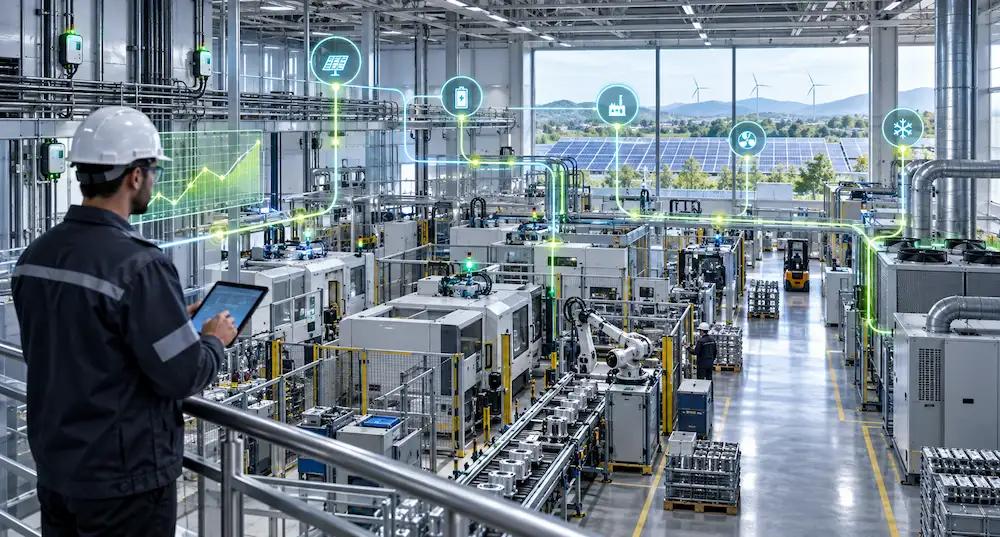
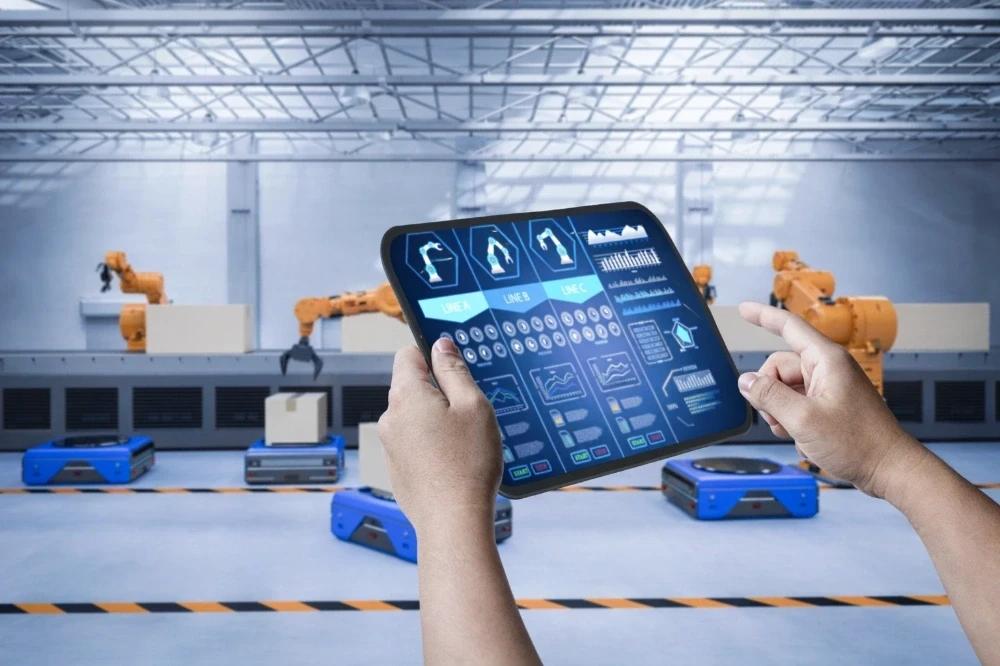
AI defect detection improves manufacturing quality by identifying defects in real time, ensuring consistent inspection accuracy, and enabling predictive quality control.
It helps manufacturers reduce defects by 20–50%, minimize rework, and shift from reactive inspection to proactive quality optimization, leading to faster production, lower costs, and better product consistency. For a deep technical breakdown of how the detection systems themselves work, see our complete AI defect detection guide covering model architectures, camera setups, and accuracy benchmarks.
What Is AI Defect Detection in Manufacturing?
AI defect detection is a quality control approach that uses computer vision and machine learning to automatically detect defects in products during production.
How it works:
- Cameras capture product images or video streams
- AI models analyze visual patterns instantly
- Defects are flagged in real time
- Systems continuously learn and improve
Unlike traditional systems, AI doesn’t rely on fixed rules; it learns from data and adapts to new defect patterns over time.
Why it matters: AI enables 100% inspection coverage with consistent accuracy, even in high-speed production environments. Many manufacturers are now investing in AI agent development for manufacturing to automate quality inspection, reduce defects, and improve production efficiency.
Why Is AI Defect Detection Critical for Manufacturing Quality?
AI defect detection is essential because it reduces human error, accelerates quality checks, and prevents defects from scaling across production lines.
Key advantages:
- Real-time inspection without delays
- Consistent and unbiased quality checks
- Reduced waste and rework
- Improved compliance and traceability
Key Insight for Leaders:
Traditional quality systems answer: “Was this product defective?”
AI-driven systems answer: “Why did this defect occur—and how do we prevent it?”
How AI Defect Detection Improves Manufacturing Quality
1. Real-Time Defect Detection
AI detects defects as products are being manufactured, not after.
- Immediate alerts to operators
- Faster corrective actions
- Prevents defect propagation across batches
Impact: Reduced downtime and fewer defective units reaching later stages.
2. Consistent and Objective Inspection
Manual inspection varies due to fatigue, skill, and environmental factors.
AI ensures:
- Uniform inspection standards
- No variability across shifts
- Reliable, repeatable outcomes
Impact: Consistent product quality across large-scale operations.
3. Detection of Micro-Defects
AI systems can detect defects that are often invisible to human inspectors.
- Subtle cracks or scratches
- Minor dimensional deviations
- Slight color inconsistencies
Impact: Improved product precision and reduced hidden quality issues.
4. Predictive Quality Intelligence
AI analyzes defect patterns and identifies root causes.
- Detects early warning signals
- Correlates defects with process conditions
- Enables preventive maintenance
Impact: Fewer defects before they occur, not just after. This is where root cause analysis ai agents become critical, helping manufacturers identify why defects occur and prevent recurrence.
5. Reduced Rework, Scrap, and Warranty Costs
By catching defects early, manufacturers can:
- Reduce material waste
- Minimize rework cycles
- Lower warranty claims using AI Agent
Impact: Direct cost savings and improved margins.
6. Continuous Improvement Through Data Feedback Loops
AI systems improve over time by learning from new data.
- Better detection accuracy
- Adaptation to new defect types
- Ongoing process optimization
Impact: Quality systems become smarter with every production cycle.
Cut defects by up to 30% with AI-driven operations
Launch Your AI PilotReal-World Applications of AI Defect Detection
Use Case 1: Automotive Manufacturing
AI systems inspect:
- Paint finishes
- Weld seams
- Surface defects
Example: A manufacturer implementing AI-based visual inspection reduced paint defects significantly by detecting inconsistencies in real time, preventing large batches of defective vehicles.
Outcome: Improved finish quality and reduced recall risks.
Use Case 2: Electronics Manufacturing
In PCB production:
- AI detects micro-cracks and misalignments
- Identifies soldering defects
Example: AI Agents for the Electronics Industry use inspection systems help detect microscopic defects that would otherwise lead to product failures in the field.
Outcome: Higher yield rates and lower failure rates.Similar approaches are being adopted in AI in telecom equipment manufacturing, where precision and defect-free production are critical.
Quality requirements vary significantly by product type — manufacturers of circuit boards and sensors can find component-specific guidance in our guide to AI-driven QA for electronic components.
Use Case 3: FMCG and Packaging
AI identifies:
- Labeling errors
- Packaging defects
- Seal integrity issues
Example: A packaging line uses AI to ensure every product meets labeling compliance standards, reducing costly recalls.
Outcome: Better compliance and stronger brand trust.
Related Read - Improve Electronics Quality with AI-Driven Quality Assurance
AI Defect Detection vs Traditional Inspection
| Factor | Traditional Inspection | AI Defect Detection |
|---|---|---|
| Inspection Type | Manual / Sampling | Automated / 100% |
| Speed | Slow | Real-time |
| Accuracy | Variable | High & consistent |
| Scalability | Limited | High |
| Cost Impact | High long-term | Optimized |
Key Insight: AI transforms quality control from a bottleneck into a scalable competitive advantage.
A Practical Framework to Implement AI Defect Detection
Step 1: Identify High-Impact Quality Issues
Focus on:
- Processes with high defect rates
- Areas with costly rework
Step 2: Collect and Prepare Data
- Capture high-quality images or video
- Label defect vs non-defect data accurately
Step 3: Train AI Models
- Use historical production data
- Train models to recognize defect patterns
Some manufacturers use AI simulation tools for manufacturing optimization to validate defect detection models before deploying them in production.
Step 4: Deploy in Production
- Integrate AI with cameras and systems
- Enable real-time monitoring
Step 5: Continuously Improve
- Use feedback loops
- Refine models with new data
Implementation Checklist
- Defined business use case
- Sufficient and clean data
- Infrastructure readiness
- Integration capability
- Cross-team alignment
Pro Tip: Start with a pilot project, validate ROI, and then scale across production lines. If you’re evaluating partners, explore the top vendors building custom AI agents for manufacturing enterprises to accelerate implementation.
What ROI Can You Expect from AI Defect Detection?
Most manufacturers achieve measurable improvements within months.
Typical outcomes:
- 20–50% reduction in defect rates
- 30–70% faster inspection processes
- Significant reduction in rework costs
- Improved customer satisfaction
ROI Timeline:
- Pilot phase: 3–6 months
- Scaling phase: 6–12 months
- Full ROI realization: 12–18 months
Bottom Line: AI defect detection delivers both operational efficiency and financial returns. Many of the best AI agent companies for manufacturing operations in 2026 are already delivering measurable ROI within months.
For automotive OEMs, quality improvements on the production floor translate directly to customer satisfaction downstream — see how automotive customer service and dealer operations AI agents handle quality-related inquiries at the dealer level.
Transitioning from manual to AI-powered inspection is as much a workforce decision as a technology one — our guide to AI workforce planning covers how manufacturers can map out the retraining, redeployment, and headcount strategy that makes AI defect detection sustainable at scale.
Challenges of AI Defect Detection
1. Data Readiness and Standardization
Many organizations lack structured and labeled defect data.
Solution: Start with a focused dataset and gradually expand coverage.
2. Integration with Existing Systems
Legacy infrastructure can complicate deployment.
Solution: Adopt modular AI solutions that integrate via APIs without disrupting operations.
3. Building Trust in AI Systems
Initial false positives can create skepticism.
Solution: Run AI alongside manual inspection initially to validate accuracy and build confidence.
4. Scaling Across Operations
Moving from pilot to enterprise-wide deployment can be complex.
Solution:Standardize processes, reuse models, and align leadership on scaling strategy.
5. Organizational Change Management
Adoption often requires a shift in mindset.
Solution: Position AI as a decision-support tool that enhances human capability.
Detect defects early. Reduce operational costs with AI.
Book a Free ConsultationIs AI Defect Detection Right for Your Manufacturing Operation?
Best-fit scenarios:
- High-volume production environments
- High cost of defects or recalls
- Strict quality and compliance requirements
Signals you should adopt AI:
- Increasing defect rates
- Manual inspection bottlenecks
- Scaling production complexity
Conclusion - The Shift from Inspection to Intelligent Quality Systems
AI defect detection is not just an upgrade to existing quality processes it represents a fundamental transformation in how manufacturing quality is achieved.
Instead of relying on end-of-line inspection, manufacturers can now:
- Monitor quality continuously
- Detect defects instantly
- Prevent issues before they escalate
This transforms quality control from:
- Reactive → Proactive
- Manual → Intelligent
- Operational necessity → Strategic differentiator
The real advantage lies in consistency. In modern manufacturing, success is not just about producing faster it’s about producing with precision, reliability, and intelligence at scale. Organizations that invest in AI defect detection today are building self-optimizing production systems that continuously improve over time, creating long-term competitive advantage.
Ready to improve quality, reduce defects, and scale efficiently? Connect with our AI experts and start your AI-driven quality transformation today.