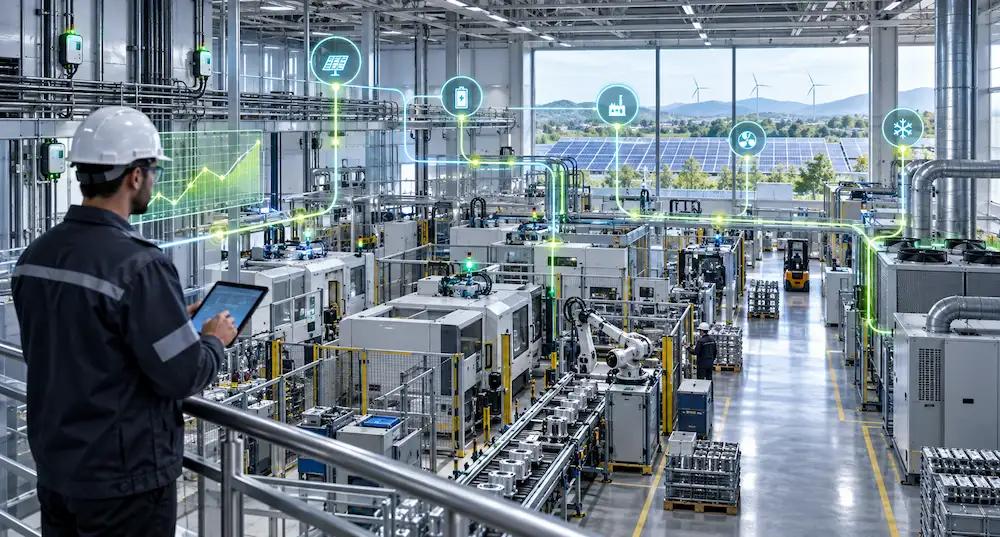

AgentOps Solutions for Manufacturing are systems that manage, monitor, and optimize AI agents across factory operations helping manufacturers increase productivity, reduce downtime, and scale AI effectively.
In simple terms, AgentOps acts as the operational layer between AI and real-world factory performance, ensuring that AI systems continuously deliver measurable outcomes rather than remaining isolated experiments.
Why Manufacturing Needs AgentOps Now More Than Ever
Manufacturing is no longer just about automation it’s about intelligent, adaptive operations. Over the past few years, factories have invested heavily in AI technologies such as predictive maintenance, computer vision, and demand forecasting. However, a large percentage of these initiatives fail to move beyond pilot stages.
The core issue isn’t the AI itself, it's the lack of an operational system to manage it at scale.
When AI models are deployed in real production environments, they face constant variability:
- Machine conditions change
- Supply chain disruptions occur
- Demand fluctuates unpredictably
Without a system to continuously monitor and optimize performance, these AI models quickly lose effectiveness.
AgentOps Solutions solve this challenge by introducing:
- Continuous monitoring of AI agents
- Real-time performance optimization
- Scalable deployment across multiple production units
Key Insight: AI alone doesn’t transform manufacturing operationalizing AI does.
How AgentOps Solutions Improve Factory Productivity
Companies with AgentOps capabilities enhance productivity by embedding intelligence into everyday operations and continuously refining decisions using real-time data.
1. Real-Time Production Optimization
Traditional production planning relies on static schedules that often fail when disruptions occur. AgentOps changes this by enabling AI agents to dynamically adjust operations.
For example, if a machine slows down or a delay occurs, the system can automatically redistribute workloads or adjust production priorities without manual intervention.
Key benefits include:
- Reduced production bottlenecks
- Improved throughput
- Faster response to disruptions
2. Predictive Maintenance at Scale
Unplanned downtime is one of the biggest cost drivers in manufacturing. Traditional maintenance approaches either reactive or time-based are inefficient and costly.
AgentOps enables predictive maintenance by allowing AI agents to continuously analyze machine data and detect anomalies before failures occur.
What this enables:
- Early fault detection
- Reduced equipment breakdowns
- Lower maintenance costs
3. Automated Quality Control
Quality assurance is critical, but manual inspection processes often slow down production and introduce inconsistencies.
With AgentOps, AI-powered defect detection vision systems inspect products in real time, identifying defects instantly and triggering corrective actions.
Impact on operations:
- Reduced defect rates
- Improved consistency
- Lower rework and waste
4. Intelligent Resource Allocation
Efficient use of resources is essential for maximizing productivity. AgentOps systems optimize how machines, labor, and materials are utilized across the factory.
Instead of relying on manual planning, AI agents continuously adjust allocations based on real-time conditions.
This leads to:
- Better machine utilization
- Optimized workforce deployment
- Reduced material wastage using AI to Minimize Packaging inefficiencies in manufacturing processes
What Kind of Results Can Manufacturers Expect?
While results vary by industry, typical outcomes include:
- 10–20% increase in production throughput
- 30–50% reduction in unplanned downtime
- 15–25% improvement in product quality
Takeaway: AgentOps doesn’t deliver incremental improvements; it drives system-wide efficiency gains.
Book a quick demo to see AgentOps in action →
Schedule a DemoReal-World Use Cases of AgentOps in Manufacturing
AgentOps is not a theoretical concept; it is already delivering value across multiple manufacturing sectors.
Use Case 1: Assembly Line Optimization
Scenario: Automotive or electronics manufacturing Production delays often occur due to bottlenecks in specific stages of the assembly line.
With AgentOps, AI agents monitor workflows in real time and dynamically adjust task allocation to eliminate inefficiencies.
Results:
- Reduced idle time
- Increased throughput
- Smoother production flow
Use Case 2: Predictive Maintenance for Heavy Machinery
Scenario: Steel, cement, or heavy equipment manufacturing, Unexpected equipment failures can halt entire production lines.
AI agents continuously analyze machine signals and identify early warning signs of failure.
Results:
- Fewer breakdowns
- Lower maintenance costs
- Increased equipment lifespan
Use Case 3: AI-Driven Quality Inspection
Scenario: FMCG or pharmaceutical manufacturing, Manual inspection processes often fail to detect micro-defects.
AgentOps-powered vision systems ensure every product is inspected in real time.
Results:
- Higher product quality
- Reduced rework
- Improved compliance
Key Takeaway: AgentOps ensures these use cases scale consistently across plants not just remain isolated successes.
One of the highest-ROI manufacturing agent categories to deploy under an AgentOps framework is inventory optimization agents, which continuously balance stock levels, demand forecasts, and reorder triggers.
The AgentOps Framework for Manufacturing (Step-by-Step Playbook)
Successfully implementing AgentOps requires a structured, phased approach rather than a one-time deployment.
Step 1: Identify High-Impact Use Cases
Focus on areas where improvements will deliver measurable ROI:
- Downtime-heavy processes
- Production bottlenecks
- Quality issues
By implementing AI in Manufacturing Process Automation, manufacturers can identify inefficiencies faster, automate routine decisions, optimize workflows, and improve overall production performance.
Step 2: Deploy AI Agents in Controlled Environments
Start small by implementing AI agents in:
- A single production line
- A specific use case
This reduces risk and allows for controlled testing.
Step 3: Monitor and Measure Performance
Once deployed, continuously track:
- Accuracy of predictions
- System uptime
- Impact on productivity
Step 4: Optimize Using Feedback Loops
AgentOps systems continuously improve performance by:
- Learning from new data
- Refining decision-making models
Step 5: Scale Across Operations
After successful validation, expand deployment across:
- Multiple production lines
- Multiple factory locations
Quick Implementation Checklist
Before scaling, ensure:
- Clear KPIs are defined (throughput, downtime, yield)
- Data infrastructure is in place
- Monitoring tools are active
- Governance frameworks are established
Why Most Manufacturing AI Initiatives Fail (And How AgentOps Fixes It)
Many manufacturers struggle to achieve ROI from AI investments not because of poor technology, but due to operational gaps.
Common Reasons for Failure
- AI projects remain stuck in pilot phases
- Lack of visibility into AI performance
- Integration challenges with legacy systems
- No continuous optimization process
How AgentOps Solves These Challenges
AgentOps introduces a structured operational layer that ensures AI systems deliver consistent value.
Key solutions include:
- Centralized monitoring dashboards
- Continuous performance tracking
- Seamless system integration
- Ongoing optimization through feedback loops
Insight: AI doesn’t fail because of models it fails because of missing operational discipline.
AgentOps-managed deployments become especially powerful when governing agents responsible for critical functions like AI-driven supply chain risk monitoring, where agent reliability directly affects procurement continuity.
Key Benefits of AgentOps Solutions for Manufacturing Leaders
For decision-makers, AgentOps delivers both operational and strategic advantages.
Core Benefits
- Increased efficiency: Continuous optimization improves output with AI agents for manufacturing efficiency improvement
- Reduced downtime: Predictive insights prevent disruptions
- Improved quality: Real-time inspection ensures consistency
- Faster decisions: AI agents act instantly on data
Scalable AI adoption: Expand across multiple facilities
Traditional Automation vs AgentOps
| Traditional Automation | AgentOps Solutions |
|---|---|
| Rule-based | AI-driven |
| Static workflows | Dynamic optimization |
| Reactive | Predictive |
| Limited scalability | Enterprise-wide scalability |
How to Choose the Right AgentOps Solution
Selecting the right AgentOps Services or solution is critical for long-term success.
Key Features to Look For
- Real-time monitoring and analytics
- Integration with IoT and ERP systems
- Scalability across plants
- Strong security and compliance
Questions to Ask Vendors
Before making a decision, ask:
- How is AI performance tracked and improved?
- Can the solution scale across multiple plants?
- What measurable ROI can be expected?
Choosing an AgentOps-ready vendor is as important as the framework itself — see our roundup of the best AI agent companies for manufacturing to identify partners with proven production-grade deployment experience.
Not sure where to start? Connect with our AI experts to evaluate the right AgentOps strategy for your factory.
The Future of Manufacturing: Autonomous and AgentOps-Powered
Manufacturing is moving toward a future where factories are no longer just automated—they are self-optimizing systems.
In this new model:
- AI agents collaborate across workflows
- Decisions are made in real time
- Systems continuously learn and improve
AgentOps will be the foundation enabling this transformation.
Conclusion: Why AgentOps Is the Secret Weapon
Manufacturing is shifting from automation to intelligent, self-optimizing operations. While AI has unlocked new possibilities across maintenance, quality, and production, its real value is only realized when it is consistently managed and scaled.
That’s where AgentOps Solutions for Manufacturing make the difference. By providing a structured operational layer, AgentOps ensures AI agents are not just deployed, but continuously monitored, optimized, and aligned with business outcomes. It turns isolated AI initiatives into scalable systems that drive real improvements in productivity, uptime, and efficiency.
For manufacturing leaders, this means:
- Faster, data-driven decision-making
- Reduced operational risks
- Sustainable productivity gains
AgentOps bridges the gap between AI adoption and real factory performance making it a critical capability for manufacturers looking to stay competitive.
AgentOps is most effective when integrated from day one of your AI journey — our AI PoC to production implementation guide walks through how to embed monitoring and governance from pilot through scale.
Ready to move beyond AI pilots? Connect with our AI experts to build your AgentOps strategy.